





A Guide to Our Sheeting Fabrics
How sateen, percale, and eucalyptus lyocell each get made — how they actually feel — and a simple way to decide which one belongs on your bed.

We make sheets in three distinct qualities — two cottons, woven two different ways, and an entirely separate fiber in eucalyptus lyocell. Each one is the right answer to a different question. Sateen is the smooth, lustrous one. Percale is the crisp, cool one. Eucalyptus is the cooling, hypoallergenic one. The fastest way to choose is to skim the three below and find the one that matches how you actually use your bed.
Three weaves. Three fibers. Three answers to "what should I sleep on?"
The Smooth, Lustrous One
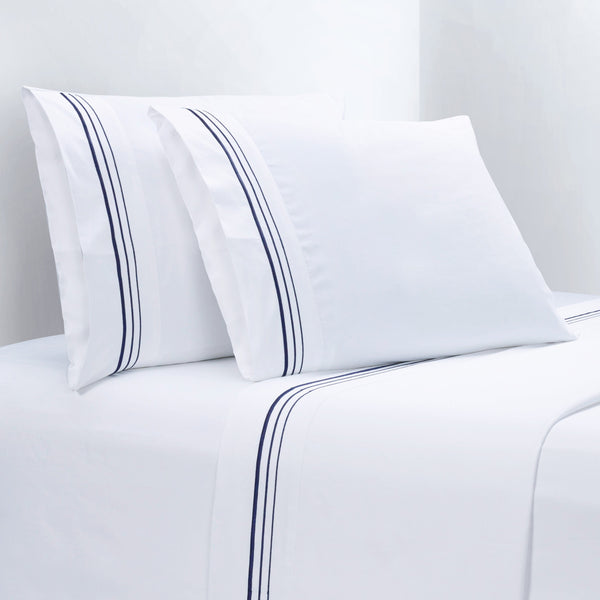
Silky to the touch, with a soft sheen that catches the light. Our sateens lend themselves to embroidery and decorative detailing — which is why most of our sateen sets are dressed.
How sateen is made
In a sateen weave, four warp threads float over a single weft thread before tucking under. Those long surface "floats" are what produce the fabric's signature luster and the smooth glide you feel when you slide between the sheets. The tradeoff: floats can snag more easily than a balanced plain weave, so sateen rewards a gentler wash routine.
How it feels in bed
Sateen is the right call if you like a softer, more luxurious hand against your skin. It runs slightly warmer than percale because the tighter, smoother surface traps a thin layer of body heat — which most cool sleepers prefer, and most hot sleepers don't. It also drapes — pillowcases settle, top sheets fall in folds rather than standing up crisply.
Why our sateens are decorative
Sateen's smooth surface is an ideal canvas for embroidery and applied detail — the stitches sit cleanly without disappearing into a textured weave. Most of our sateen sets carry an embroidered border, flange, or motif. We also offer a plain sateen for buyers who want the hand-feel without ornament.



The Crisp, Cool One
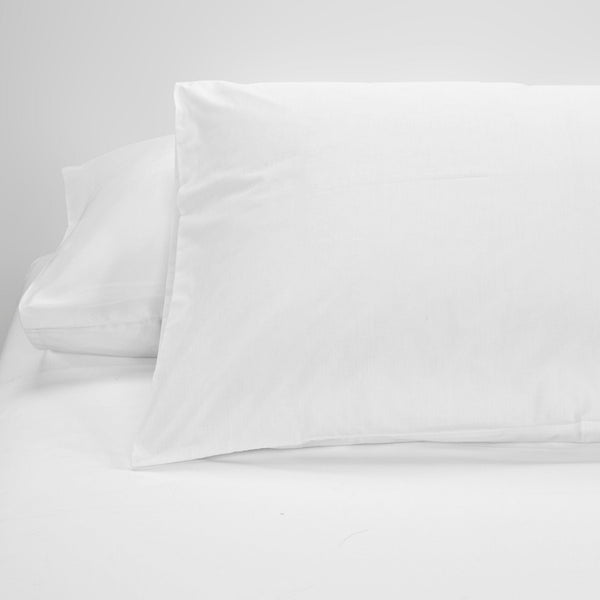
Matte, breathable, hotel-fresh. The sheet that crackles a little when you make the bed and gets softer with every wash.
How percale is made
Percale is the most fundamental weave there is — one thread over, one thread under, repeated across the entire fabric. The structure is balanced and tight, which gives percale its signature matte finish, cool surface, and remarkable durability. Because there are no long floats, there is far less to snag.
Why 200 thread count is the right number
A 200TC percale is the classic specification — long the workhorse spec at fine hotels and premium sheeting houses. Push percale much higher and you have to switch to thinner yarns, which trade away the crispness and breathability that make percale percale in the first place. Higher isn't better here — it's a different fabric.
How it feels in bed
Cool, crisp, and a little structural the first few nights — like climbing into a freshly turned-down hotel bed. With each wash, percale softens without losing its breathability. If you sleep hot, live somewhere warm, or simply prefer a tighter, fresher hand, this is your weave.
Plain or printed
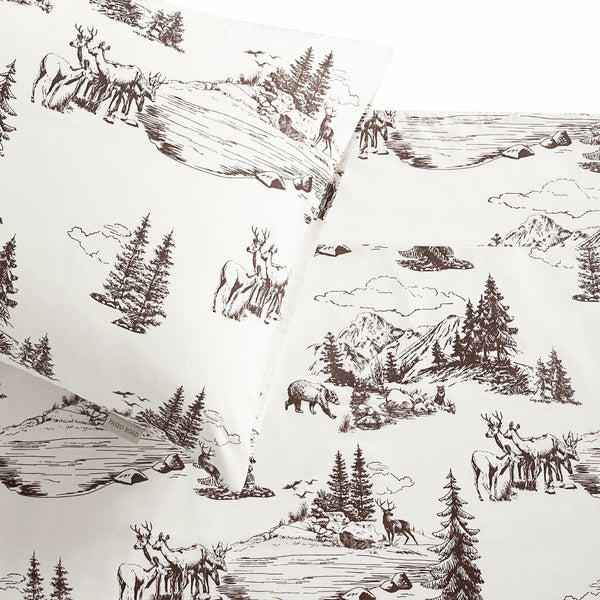
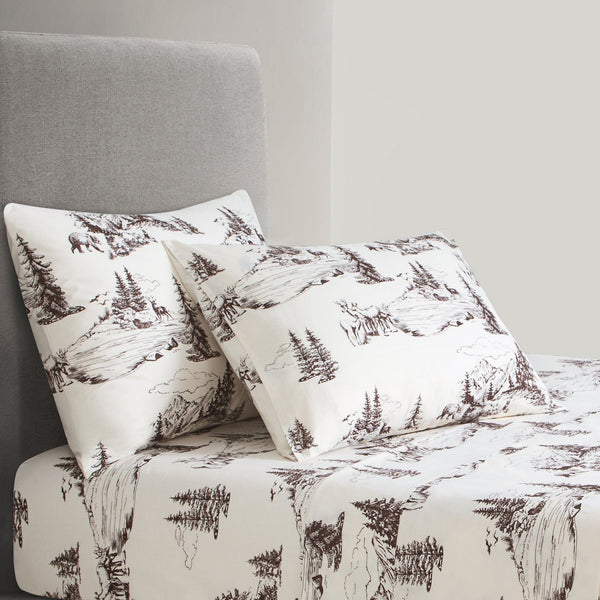
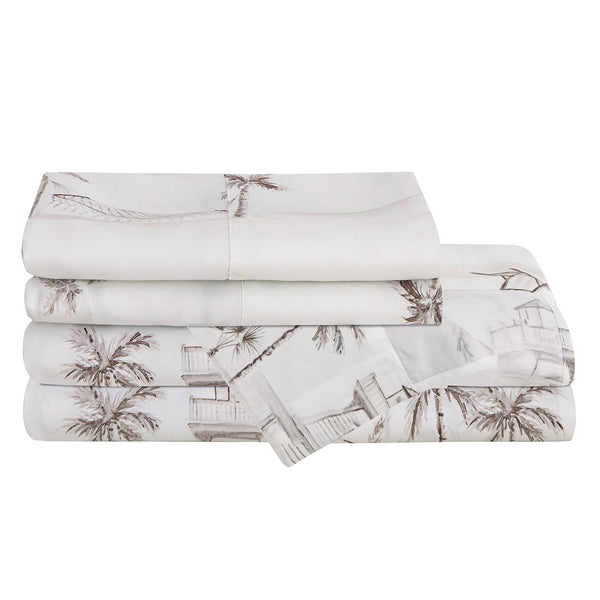
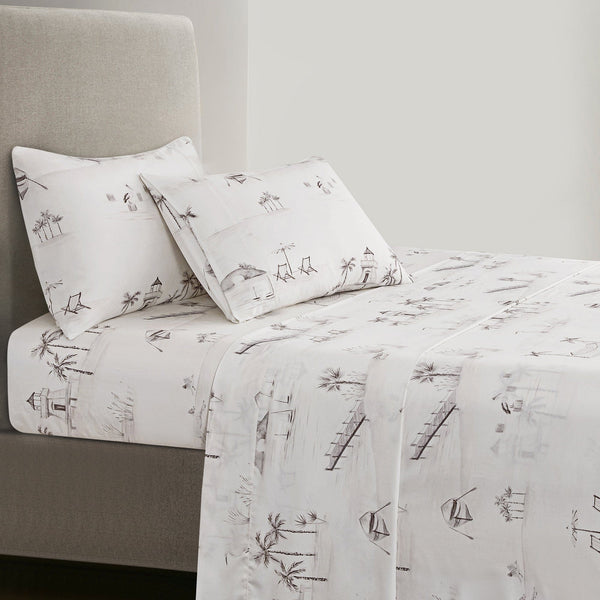
Percale's matte surface takes pigment cleanly, which is why we lean toward printed designs on this base. The motifs sit flat against the fabric without any sheen interference. We carry both printed and plain percale sets — the example below is one of our printed seasonal designs.
The Cool, Modern One
Spun from eucalyptus pulp through a closed-loop process. Cooler against the skin than cotton, naturally moisture-wicking, and softer with every wash.
What lyocell actually is
Lyocell is a regenerated cellulose fiber — meaning it starts as wood pulp (in our case, sustainably harvested eucalyptus) that's dissolved in a non-toxic solvent and re-spun into a long, smooth filament. The same family of fibers is sometimes sold under the TENCEL™ brand. Unlike cotton, the fiber surface is unusually smooth, which is what gives lyocell sheets their signature glide.
Why hot sleepers love it
Lyocell's fiber structure absorbs moisture into the core of the strand rather than holding it on the surface — which means it pulls perspiration away from your skin faster than cotton can. The fabric also feels noticeably cool to the touch when you first lie down, the way a stone tabletop does. For hot sleepers, night sweats, hot climates, and warmer months, it's the most comfortable sheet we make.
Sustainable by construction
Eucalyptus is fast-growing, doesn't require irrigation, and is harvested from trees grown specifically for the purpose. The lyocell process itself recycles roughly 99% of the non-toxic solvent it uses — closing the loop in a way that the cotton industry, with its water and pesticide demands, cannot. If environmental footprint matters to you, this is the sheet to choose.
Solid or printed
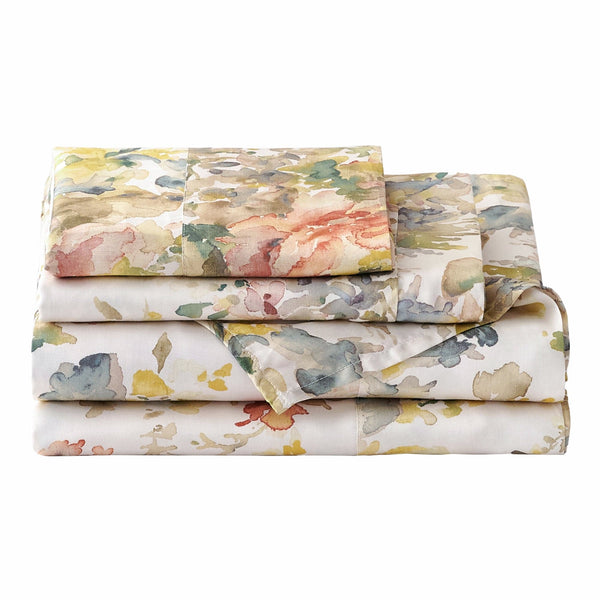
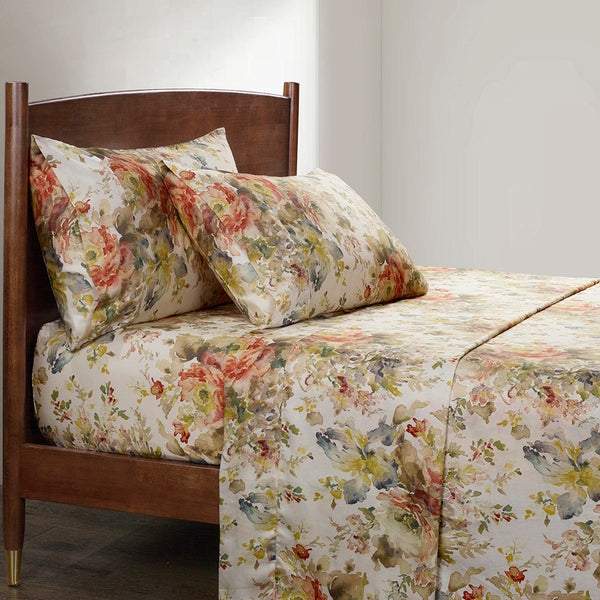
We do both. Our solid Eucalyptus Sheet Set is the cleanest expression of the fiber — pure hand-feel, no ornament. Our printed lyocell sets carry seasonal motifs that show up beautifully against the fabric's soft luster.


All three, at a glance
| Cotton Sateen | Cotton Percale | Eucalyptus Lyocell | |
|---|---|---|---|
| Construction | 4-over-1 sateen weave, 350TC long-staple cotton | 1-over-1 plain weave, 200TC long-staple cotton | 100% lyocell fiber from eucalyptus pulp |
| Hand-feel | Silky, smooth, with subtle sheen | Crisp, cool, matte | Silky, cool, lightly drapey |
| Temperature | Slightly warmer; traps a thin layer of warmth | Breathable, cool to the touch | Coolest of the three; actively wicks moisture |
| Drape | Falls in soft folds | Holds its shape — looks "made" | Drapes fluidly, almost liquid |
| Decoration | Excellent for embroidery, flange, applied detail | Excellent for printed designs | Carries both solids and prints well |
| Best for | Cool sleepers, decorative beds, year-round use | Hot sleepers, warm climates, hotel-fresh feel | Hot sleepers, sensitive skin, eco-minded buyers |
| Care | Wash cool, tumble low; avoid sharp objects | Wash cool, tumble low; very forgiving | Wash cool, tumble low or line dry |
If you already know which of the three is right for you, you can stop here and shop. The rest of this guide is for the curious — what to look for on a label, what to ignore, and how to tell a great sheet from a clever one before you buy.
Start with the fiber: long-staple cotton is the foundation
Before weave, before thread count, before anything else — there's the cotton fiber itself.
Cotton is sold by staple length: how long the individual fibers are. Long-staple cotton (and its premium cousin, extra-long-staple) spins into a smoother, stronger yarn than short-staple cotton. The result is a fabric that pills less, feels softer in the hand, and stays in your bed for years longer.
Short-staple cotton is what shows up in cheap sheet sets. It looks fine in the package. By month three, the surface is fuzzed, the seams are tired, and you're shopping for replacements.
Both of our cotton sheeting qualities — the 350TC sateen and the 200TC percale — are built on single-ply, long-staple cotton. That's the actual specification that matters.
Forget thread count
Walk into a bedding aisle and you'll be told to look at one number: thread count. Bigger is better, the implication goes. A 1,000-thread-count sheet must be better than a 200.
It isn't true, and it isn't even close.
"1,000 thread count" sheets almost always inflate the number — multi-ply yarns counted twice to puff up the spec. A 200TC percale or a 350TC sateen built on single-ply, long-staple cotton will outperform them on softness, breathability, and longevity every time. The fiber and the weave do the work. Not the number.
Skip the microfiber
One quick note on what isn't in our line.
Microfiber is polyester — plastic, in other words — spun very fine and woven tight. It's cheap, and it's everywhere in the entry-level sheet category.
Plastic doesn't breathe. It traps heat. It builds up static. And it has the same eight-hours-a-night job as a cotton or eucalyptus sheet. Whether you buy ours or someone else's, this isn't the part of your bed where saving fifteen dollars makes sense.
Construction is what makes a sheet last
Fiber and weave determine how a sheet feels. Construction determines how long it stays that way. The things to look for, none of which show up in the marketing copy of a bad sheet set:
- Reinforced seams. The corners of the fitted sheet take more stress than any other part of the bed. They should be reinforced, not single-stitched.
- Finished hems. Edges that are folded and double-stitched, not serged and called done.
- An honest weight. A queen sheet set built right has substance to it. If the package feels suspiciously light, the fabric is thin and the lifespan will match.
Cheap construction shows up by month three: pilled surface, popped seams, sheets you replace. Good construction is invisible — until you realize you've owned the same sheets for seven years and they still feel new.
A small but useful skill: how to read a sheet label
Long-staple, single-ply cotton. The two specs that actually matter. If a label doesn't say "long-staple," assume it isn't. If it doesn't say "single-ply," it may be ply-doubled to inflate the thread count.
Thread count, in context. Useful within a weave — a 350TC sateen versus a 200TC sateen is a real comparison. Not useful across weaves — a 200TC percale and a 350TC sateen aren't trying to be the same fabric. Anything over 800 is almost always marketing.
Weave, named explicitly. Look for percale or sateen on the label. "Cotton sheets" with no weave specified is a red flag.
Fiber, named explicitly. "Eucalyptus" or "lyocell" should appear if it's lyocell. "Microfiber" means polyester. Vague terms like "luxury fiber blend" usually hide synthetics.
Match the sheet to the sleeper
Eucalyptus, then percale
Lyocell wicks moisture better than any cotton; percale runs cooler than sateen because the plain weave breathes. Either is a meaningful upgrade over a sateen if you wake up overheated.
Shop cooling sheetsSateen — embroidered
A 350TC sateen base lets borders, flanges, and embroidered motifs sit cleanly without fighting the fabric. Most of our sateen sets are designed this way.
Shop sateen sheetsEucalyptus lyocell
Sourced from fast-growing trees that don't require irrigation, made through a closed-loop process that recycles its solvents. The lowest-impact sheet we make.
Shop eucalyptusCotton percale
That crisp, structural feel of a turned-down hotel sheet comes from a 200TC plain weave. It's not an accident that the best European hotels specify it almost exclusively.
Shop percale sheetsCotton sateen
Soft, smooth, with a quiet luster — comfortable in every season except the very hottest. The right pick if "luxurious hand" is at the top of your list.
Shop sateen sheetsBuy two sets
A favorite trick: rotate a percale or lyocell set in summer with a sateen in winter. Both sets last longer with the rest, and your bed responds to the seasons the way a wardrobe does.
Shop all sheetsHow to make any sheet last
All three of our weaves take the same baseline care: wash in cool water, tumble dry on low, and skip the fabric softener — softeners coat the fibers and reduce both breathability and absorbency over time. A dryer ball is a better choice than a softener sheet.
Sateen is the most snag-prone of the three because of its long floats; keep it away from sharp jewelry and pet claws. Percale wrinkles more visibly than sateen — pull it out of the dryer slightly damp and smooth it onto the bed if a perfectly crisp finish matters to you. Lyocell is the easiest to care for of the three; it resists wrinkles naturally and can be line-dried.
Rotate two sets if you can — a sheet that gets washed every other week instead of every week roughly doubles its working life.
The short version
- Long-staple, single-ply cotton — or eucalyptus lyocell. The two fiber specs that actually matter.
- Percale for cool and crisp; sateen for soft and warm; lyocell for cooling.
- 200TC percale or 350TC sateen. Higher isn't better.
- Reinforced seams, finished hems, an honest weight. Construction is what makes a sheet last.
- No microfiber. Plastic doesn't breathe.